
Perfect Hotel in Chefchaouen
Chefchaouen, often called “The Blue Pearl of Morocco,” is one of the country’s most enchanting cities. Famous for its peaceful, blue-painted streets, charming architecture, and breathtaking mountain scenery, Chefchaouen has a history that is just as rich and colorful as its iconic walls. To understand its beauty, we must travel back centuries to explore how this small Andalusian town became one of Morocco’s top tourist destinations.
This complete guide covers the origins, cultural influences, historical events, and evolution of Chefchaouen from its founding to modern times.
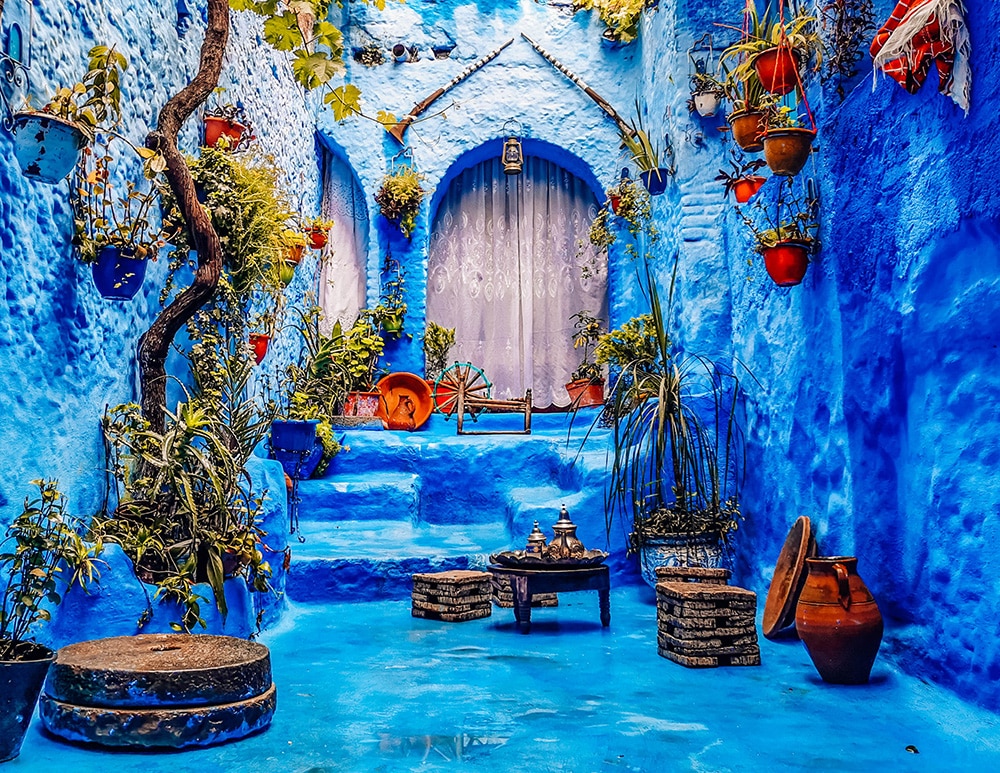
- The Founding of Chefchaouen (1471)
The history of Chefchaouen begins in 1471, when it was founded by Moulay Ali Ben Rachid, a descendant of the Prophet Muhammad.
The city was originally built as a military fortress to defend northern Morocco from Portuguese invasions along the Mediterranean coast. Its strategic location in the Rif Mountains made it an ideal base for protecting the region.
The key purpose of the founding:
Defend against foreign invasions
Protect nearby coastal cities
Establish a stronghold for resistance movements
At this early stage, Chefchaouen was not yet the blue city we know today.
- Andalusian Influence and Growth
Throughout the late 15th and early 16th centuries, Chefchaouen became a refuge for Muslim and Jewish families expelled from Andalusia during the Reconquista. These immigrants brought advanced knowledge of architecture, agriculture, crafts, and urban planning.
Andalusian contributions:
Whitewashed houses with tiled roofs
Narrow, winding streets similar to Spanish towns
Strong traditions in pottery, weaving, and leatherwork
This Andalusian influence still defines Chefchaouen’s identity today.
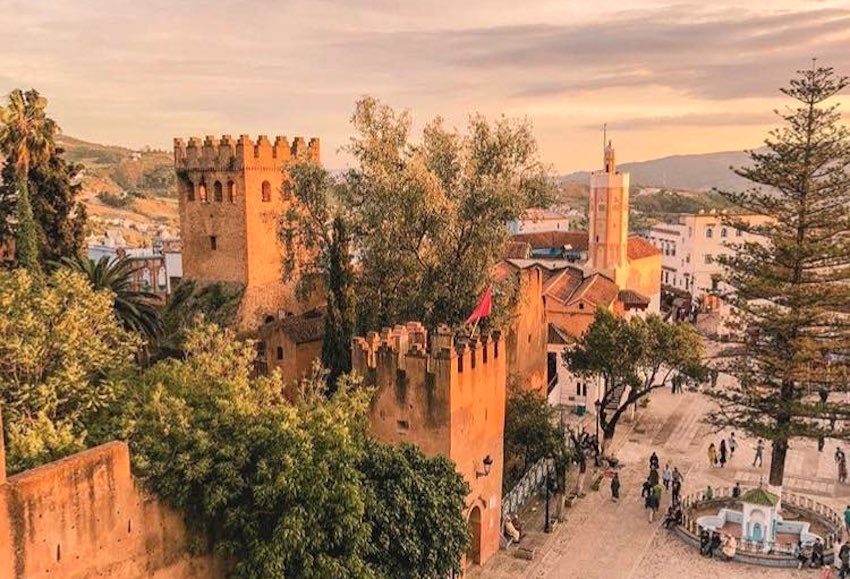
- Isolation and Cultural Preservation
For centuries, Chefchaouen remained isolated from the rest of Morocco. This isolation helped preserve its traditions and slow pace of life.
During this time, it became:
A spiritual center for Sufi communities
A peaceful mountain town protected from major conflicts
A destination mainly for trade and religious learning
Foreigners, especially Europeans, were not allowed to enter the city for many years, adding mystery to its reputation.
- The Introduction of the Blue Color (20th Century)
One of Chefchaouen’s biggest mysteries is why the city is painted blue.
The tradition began in the 1930s, when Jewish refugees settled in the city after fleeing Spain and later Europe.
Popular theories behind the blue color:
Religious symbolism: Blue represents the sky and heaven in Jewish tradition.
Cooling effect: Blue walls keep houses cooler in the mountain heat.
Mosquito deterrent: Many believe the color helps repel insects.
Tourism appeal: Over time, the blue paint became a symbol of the city and a way to attract visitors.
Whatever the reason, the blue color transformed Chefchaouen into one of the most photographed cities in the world.
- Chefchaouen During the Spanish Protectorate (1912–1956)
In 1912, northern Morocco, including Chefchaouen, came under Spanish colonial rule.
This period influenced local architecture, administration, and infrastructure.
What changed under Spanish rule:
Expansion of the city
Introduction of new public buildings
Influence on language and culture
Improved roads and trade routes
Even today, many people in Chefchaouen speak Spanish fluently.
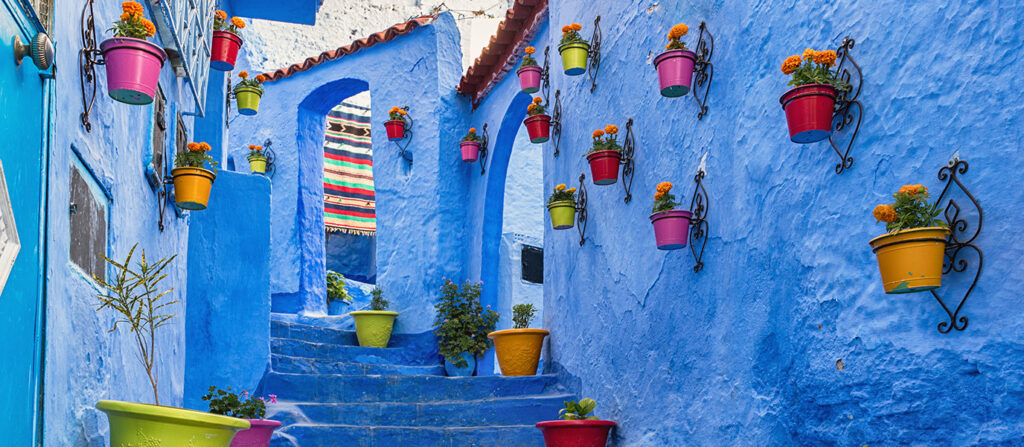
- Independence and Modern Development
After Morocco gained independence in 1956, Chefchaouen slowly opened to the world.
The city remained small and peaceful, but gradually became known for:
It's stunning blue medina
Mountain trekking
Artisanal crafts
Spiritual retreats
Unique Andalusian-Moroccan culture
Tourism began to grow in the 1990s and exploded in the last two decades.
- Chefchaouen Today: A Global Tourist Destination
Today, Chefchaouen is one of Morocco’s most visited destinations—yet it has retained its charm, calm energy, and authentic atmosphere.
What makes modern Chefchaouen special:
The dreamy blue streets of the medina
Local crafts such as weaving and leatherwork
Beautiful natural surroundings (Akalay, Talassemtane National Park)
Friendly locals and relaxed lifestyle
Mix of Moroccan, Andalusian, and Jewish heritage
The city has become a symbol of peace, beauty, and cultural harmony.
Final Thoughts
The history of Chefchaouen is a fascinating journey through Andalusian migration, religious traditions, colonial influence, and cultural preservation. Its transformation from a military fortress to a world-famous blue city shows the resilience and beauty of Moroccan culture.
Chefchaouen is not just a place to visit—it’s a place to experience. Every blue alley, mountain view, and piece of local art tells a story that goes back more than 500 years.